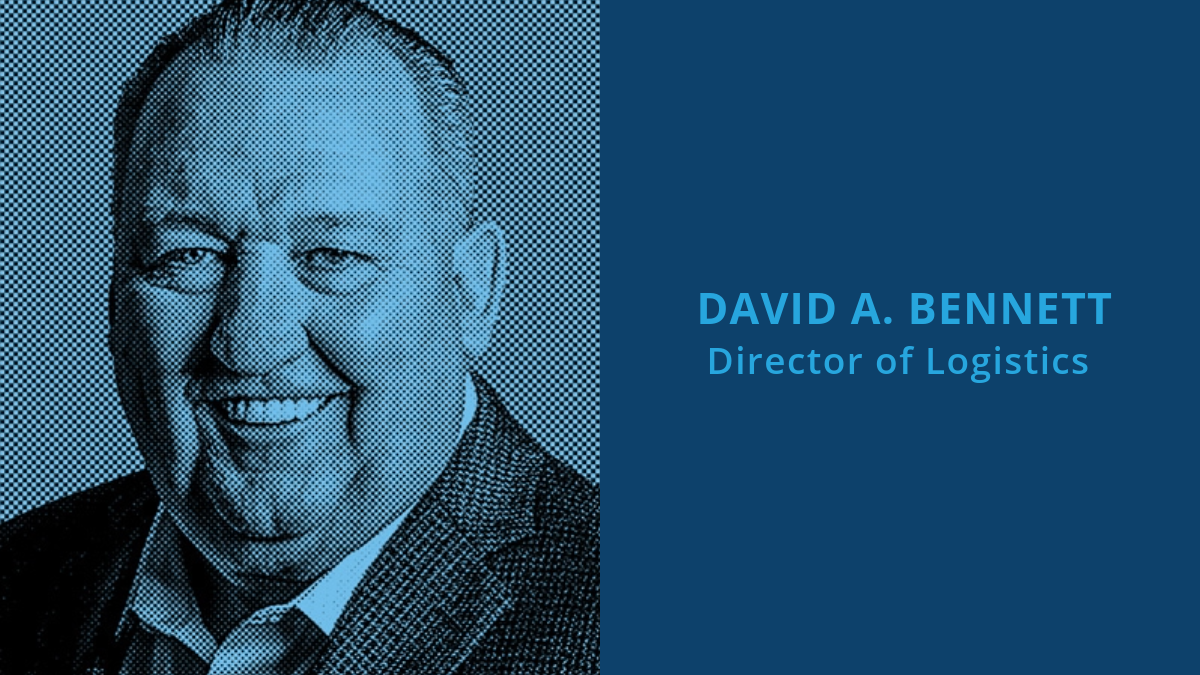
A Q&A with David A. Bennett, Director of Logistics
Inside RAF’s Logistics Strategy with David Bennett
In private equity, transportation and logistics management can play an important role in helping portfolio companies control costs, strengthen operations, and adapt to changing business needs. At RAF, David A. Bennett brings more than 35 years of transportation and logistics consulting experience to that work, supporting a diverse portfolio of companies as their operational needs evolve. In this Q&A, Dave shares more about his role and how logistics expertise supports businesses as they scale.
Q. Can you share a little bit about your role as Director of Logistics at RAF?
A. “At RAF, my role is to assist all of our companies in optimizing their supply chains. My primary focus tends to be transportation, but I also provide guidance on warehouse operations, technology enhancements, and special projects as they arise.
That can include everything from warehouse optimization to relocating a company from one facility to another. Often, I’m brought in as an outside set of eyes to make observations and recommendations for improvement. That becomes especially important as business models change. As some of our companies move from B2B to B2C, for example, the logistics can change significantly. Instead of shipping cases on pallets, now you’re shipping individual units, which impacts freight, handling, and warehouse layout. Those are the kinds of things I get involved in.”
Q. How does your role help drive operational improvements and keep the team, portfolio companies, and projects moving efficiently?
A. “I think the best way to describe that would be the way I manage transportation overall. I negotiate all the contracts with our freight providers, and in doing so, it requires me to have an intimate understanding of what each of our businesses does, how they do it, and what’s important to them in their customer service endeavor.
I must make sure we’re matching each company with the right transportation providers and structuring contracts that meet their individual needs. Part of that is leveraging the volumes we have as a group against the unique requirements of each company. RAF has companies that have over $5M per year in Freight Expense, and others that may have 2-10% of that. In every case, it is a material line item on their P&L. We have a very diverse portfolio, and we want to ensure that our transportation contracts and agreements allow each of them to operate efficiently and effectively in their respective marketplace.
As those needs change, I monitor the freight data on a daily and weekly basis to identify any anomalies or outliers that may signal a shift in the business.”
Q. What are some of the biggest logistics priorities or challenges you manage across the RAF portfolio?
A. “One of the biggest priorities is keeping our costs under control on the transportation side, because for some of our companies, it’s a big part of the P&L. Not only that, but it’s helping the companies understand how to actually turn that freight into a profit center and not give everything away that we’ve got.”
Q. What do you enjoy most about your work at RAF, and what makes the team or culture stand out to you?
A. “I would say it’s working with the diverse set of companies we have, ranging from bicycles to natural stone and tile. Over the years, I have come to specialize in an array of different industries. For me, it’s really learning about each business, their customers, and what makes them tick.
As far as the company culture goes, I’ve always felt like I’m just part of a family here. I think that’s always been one of the driving themes at RAF, and it carries through in the relationships we build across the portfolio.”
Learn More About RAF
RAF was founded 45+ years ago and acquires control positions in middle-market companies across a diverse set of industries. We maintain a long-term strategy focused on investing in businesses with strong management teams, a demonstrated history of business growth, and potential for acceleration, with EBITDA of $5-20 million.